Chess history was rewritten on 26 November 2025, in Goa, India — when 19-year-old Uzbek prodigy Javokhir Sindarov clinched the world’s most prestigious knockout chess event by beating China’s Wei Yi in nerve-shattering tiebreaks. This triumph earned Sindarov not only a $120,000 top prize but also a place in the 2026 FIDE Candidates Tournament.
It was a final that delivered everything — high drama, tension under time pressure, brilliant defence, risky attacks, and nerves of steel. If you love chess, pay attention. Because this tournament shows how powerful preparation, fundamentals and mental toughness can be.
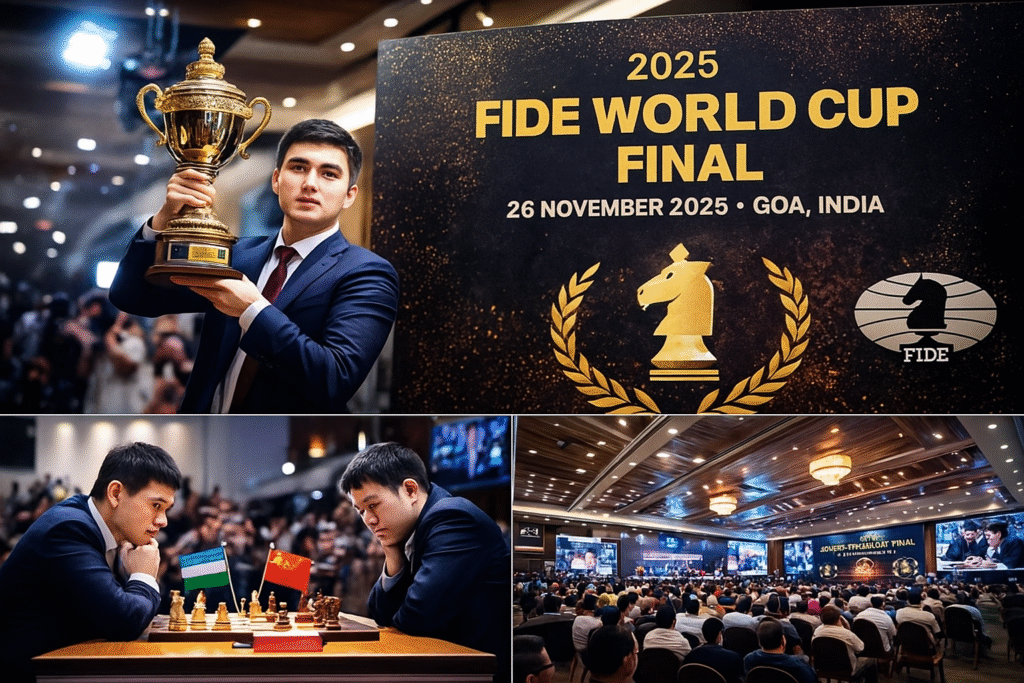
🎯 From Semifinals to Final: The Dramatic Path to Glory
Semifinal Fireworks
In the semi-finals, Sindarov faced compatriot Nodirbek Yakubboev — and after two classical games ended in draws, everything boiled down to rapid tiebreaks. Sindarov converted with Black in the first rapid game and held firm in the second to reach the final.
On the opposite side, Wei Yi overcame Andrey Esipenko after dramatic twists: Esipenko held winning chances but blundered a rook when the pressure mounted — handing the match to Wei Yi.
Thus the stage was set: a final between a rising 19-year-old and a seasoned grandmaster.
The Final Tiebreak: Calm Mind, Sharp Moves
The classical games ended in draws — setting up rapid tiebreaks for the title. In the first rapid game, both players fought fiercely, but missed decisive chances. In the second game, under time pressure and mounting tension, Sindarov kept his composure, executed precise moves, avoided mistakes — and sealed the victory.
In the blink of a few intense hours, a new World Cup champion was crowned.
🔥 What This Win Teaches Every Chess Player — Beginner or Advanced
The 2025 World Cup final isn’t just a trophy story — it’s a masterclass in what really matters in chess:
- Fundamentals + preparation: Sindarov’s opening and middlegame were solid; when it mattered, he navigated endgames and tactics with confidence.
- Composure under pressure: Blitz, rapid, tiebreaks — the clock is ticking, nerves surge, but clarity and calm prevail.
- Resilience: Even when positions got tense, threats mounted — the champion didn’t panic, he calculated.
- Adaptability: From classical to rapid — flexible thinking, not rigid patterns.
If you aspire to reach similar heights, you don’t need miracles — you need structure, guidance, training.
🎓 How HireChess.com Helps You Build the Winning Chess Mindset
At HireChess.com, that’s exactly what we believe: great results come from solid foundations, smart training, tactical awareness, and psychological strength.
Our Free Basic Chess Training Videos give you:
- Clear lessons on fundamentals — piece movement, basic tactics, opening ideas, endgames
- Easy-to-follow modules — ideal if you’re new or returning after a break
- The kind of structured learning that sets you up for long-term improvement
Think of the 2025 World Cup final as inspiration. If a 19-year-old can win at the highest level with the right mindset and preparation — so can you.
👉 Start your journey here: https://hirechess.com/free-basic-chess-training-videos
🔎 Why This World Cup Story Matters — For Chess Fans Around the Globe
- It reminds us that chess remains unpredictable — talent + training can topple reputations.
- It proves youth and fearlessness still have power in classical, rapid, and blitz formats.
- It draws attention to global tournaments happening beyond top-tier elite circles — many aspiring players worldwide watch, learn, and get inspired.
For you — whether you’re in Chennai, New York, Moscow or Mumbai — this event shows what’s possible when preparation meets opportunity.
✅ Final Thought: Move From Watching to Playing — The First Step Matters
Watching champions win is thrilling. But joining the game, learning the basics, building your own path — that’s transformative.
If you’ve ever wanted to learn chess properly — not just play random online puzzles or watch flashy games — now is the time.
Start with the basics. Build your foundation. Train smart.
👉 Get started now: https://hirechess.com/free-basic-chess-training-videos
Because in chess — as the 2025 World Cup proved — brilliance isn’t born overnight.
It’s built piece by piece