By Sunil Hireholi | Chess Coach since 2005 | Hire Chess Academy
If you’ve ever felt overwhelmed by chess books, opening theory, or endless YouTube videos, let me tell you something important:
You don’t need to learn everything in chess to become strong.
In fact, after coaching chess players for nearly two decades, I can confidently say this:
Around 20% of chess knowledge produces nearly 80% of practical playing strength.
This idea is known as the 80/20 Rule in Chess, and understanding it can completely change how fast you improve.
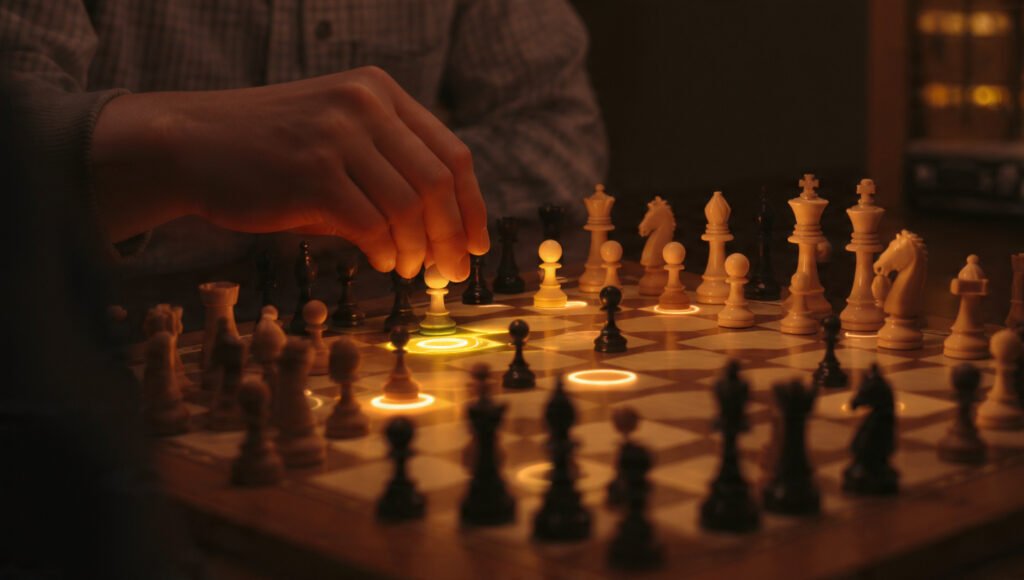
What Is the 80/20 Rule in Chess?
The 80/20 rule (also called the Pareto Principle) means:
- A small set of core skills decides most games
- Most wins and losses happen due to repeatable patterns, not deep theory
In chess terms:
- You don’t lose because you forgot move 17 of an opening
- You lose because of tactics, king safety, poor piece placement, and basic endgames
The players who improve fastest are not those who study the most—but those who study the right things.
The 20% of Chess Knowledge That Wins 80% of Games
Let’s break down the high-leverage principles that matter most.
1. Piece Activity Beats Material (When Things Are Unclear)
Many beginners are obsessed with pawns:
- “I’m up a pawn”
- “I don’t want to sacrifice”
But active pieces create:
- Threats
- Initiative
- Coordination
An active rook or bishop often wins games faster than an extra pawn that does nothing.
👉 Strong players value activity first, material second unless the position is very clear.
2. King Safety Comes Before Everything
Most amateur games are lost because:
- The king stays in the center too long
- Players push pawns in front of their own king
- Castling is delayed without reason
If your king is unsafe, tactics appear against you, not for you.
Simple rule:
Castle early. Keep your king boring. Win games elsewhere.
3. Time and Tempo Matter More Than Fancy Moves
Every unnecessary move in the opening is a gift to your opponent.
Common beginner mistakes:
- Moving the same piece multiple times
- Making random pawn moves
- Chasing pieces instead of developing
Fast, clean development wins open games—even without knowing theory.
4. Clean Tactical Vision Decides Most Games
After thousands of games reviewed, one fact is clear:
Most games below expert level are decided by simple tactics.
Pins. Forks. Skewers. Discovered attacks.
You don’t need deep calculation—just sharp pattern recognition and the habit of checking:
- Checks
- Captures
- Threats
This alone can add hundreds of rating points.
5. Pawn Structure Tells You What to Do
Pawn structure is the “map” of the position.
Key ideas to recognize:
- Weak squares
- Isolated or doubled pawns
- Pawn chains
- Pawn majorities
Once you understand the pawn structure, the plan becomes obvious—and you stop making random moves.
6. Two-Phase Thinking (Very Important)
Strong players don’t calculate everything.
They:
- Quickly identify candidate moves (checks, captures, threats)
- Calculate only what’s necessary to decide
Beginners often calculate too much—or the wrong things.
7. Endgame Basics Win More Games Than Middlegame Tricks
Here’s an uncomfortable truth:
Many players reach winning endgames—and still draw or lose.
Knowing just a few endgame ideas gives massive returns:
- King activity
- Opposition
- Key squares
- Basic rook endgames (Lucena & Philidor)
You don’t need many endgames—just the right ones.
Daily & Weekly Habits That Follow the 80/20 Rule
If you want maximum improvement with minimum time, focus on these habits:
Daily
- Solve 10–20 tactical puzzles
- Focus on accuracy and speed, not long calculation
Weekly
- Play 2–3 slow games (15+10 or longer)
- Review mistakes calmly after the game
Monthly
- Study a few model endgames
- Annotate at least one lost game to find recurring mistakes
The 80/20 Opening Strategy (This Is Key)
You do NOT need to memorize openings.
Instead:
- Choose simple, principled openings
- Learn plans and structures, not move orders
- Memorize only common traps
Familiarity beats variety. Always.
Middlegame Checklist (Practical & Simple)
Before every move, ask:
- Are there immediate threats?
- Can any piece be improved?
- Is there a pawn break?
- Does my plan match the pawn structure?
This alone eliminates most blunders.
Psychology: The Hidden 20%
Chess is also emotional.
Strong practical players:
- Play for opponent mistakes
- Simplify when ahead
- Complicate when behind
- Control emotions after blunders
- Manage time properly
Mental discipline wins as many games as knowledge.
Why Most Players Stay Stuck
Most players fail because they:
- Study too much theory
- Play too fast
- Skip fundamentals
- Never review losses properly
They violate the 80/20 rule.
How Hire Chess Applies the 80/20 Rule for You
At Hire Chess Academy, we teach:
- What matters first
- What to ignore for now
- How to think during real games
- How to stop repeating the same mistakes
That’s why we start with strong basics.
👉 Free Basic Chess Training Videos
https://hirechess.com/free-basic-chess-training-videos
These videos focus on the highest-impact concepts—not confusing theory.
A Simple 3-Month 80/20 Plan
- Daily: 15–30 minutes tactics
- Weekly: 3 slow games + review
- Monthly: Learn 2 basic endgames
- Opening: Stick to one system and understand its plans
This approach has helped countless players gain several hundred rating points.
Final Thought
Chess improvement is not about doing more.
It’s about doing what matters most.
Apply the 80/20 rule, and chess becomes:
- Clearer
- Calmer
- More enjoyable
- More successful
Start the right way.
👉 Free Basic Chess Training Videos
https://hirechess.com/free-basic-chess-training-videos
See you on the board ♟️
— Sunil Hireholi
Founder, Hire Chess Academy